30 Sep 2026
Tribal Casino Revenue Sharing Payments to Michigan Drop Sharply Over Compact Disputes

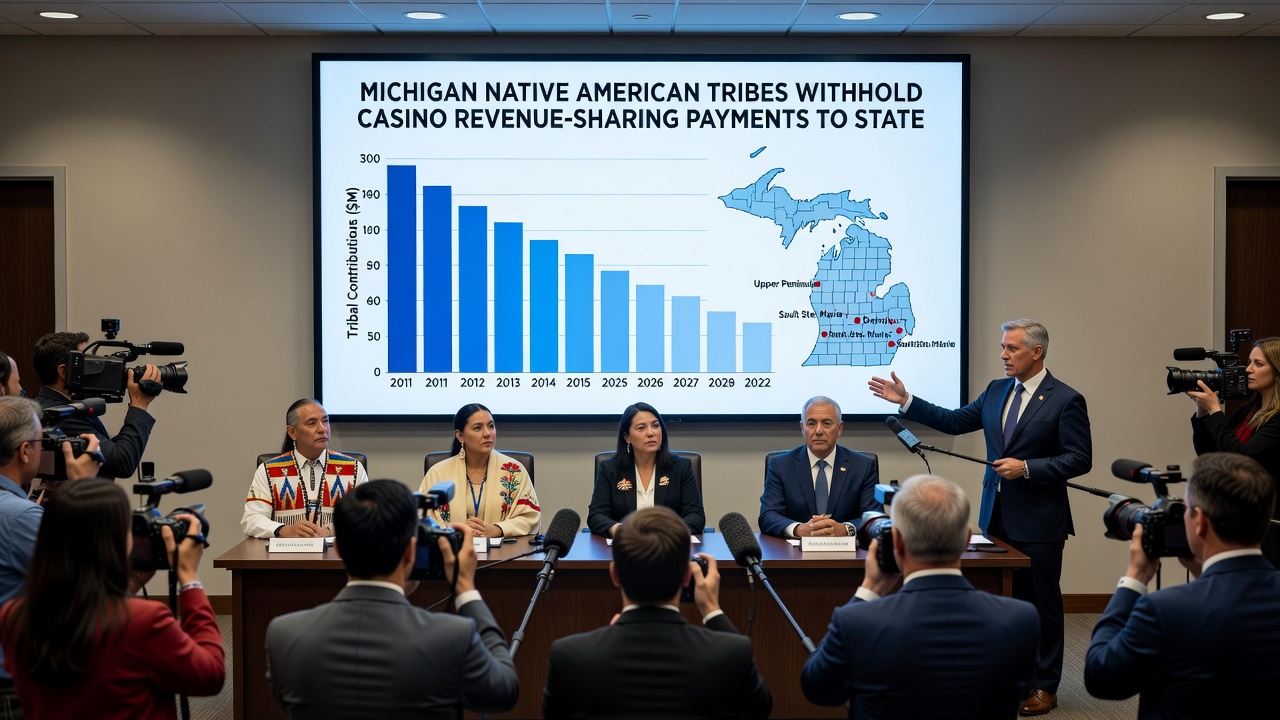
Michigan Native American tribes have increasingly withheld casino revenue-sharing payments to the state, which produced a 71 percent decline from $52.8 million in 2022 to $15.4 million in 2025, and multiple tribes including the Pokagon Band along with the Nottawaseppi Huron Band have stopped or reduced those transfers while arguing that state expansions in online casinos, sports betting, lotteries, and prediction markets have undermined the exclusivity protections contained in their gaming compacts.
Only the Hannahville Indian Community continues to make full payments, which has created a funding squeeze for the Michigan Economic Development Corp. that relies on these revenues for various programs. Data from Michigan Gaming Control Board figures shows the scale of the reduction, and observers note that the drop reflects ongoing tensions between tribal operators and state regulators over the terms of existing agreements.
Background on Revenue Sharing Agreements
Revenue sharing arrangements between Michigan tribes and the state emerged from tribal-state gaming compacts that allowed casinos on reservation lands in exchange for a portion of revenues flowing to state coffers, and those payments once supported economic development initiatives across multiple departments. The compacts included provisions for exclusivity, meaning the state agreed to limit certain forms of competition that could erode tribal market share, yet recent expansions in digital and sports wagering have altered that landscape according to tribal representatives.
Those who've studied the history of these deals know that the payments started at higher levels when land-based casinos dominated the market, while the introduction of online platforms and mobile betting has shifted player behavior and reduced the amounts tribes feel obligated to share under the original terms.
Reasons Tribes Cite for Withholding Payments
The Pokagon Band and Nottawaseppi Huron Band have each cited state actions that they say breach exclusivity clauses, including the rollout of sports betting through licensed operators and the growth of online casino offerings that compete directly with tribal facilities. Tribes maintain that these developments were not anticipated when the compacts were negotiated, and they have chosen to redirect funds rather than continue transfers that no longer reflect the balance of the agreements.
One study revealed that similar disputes have occurred in other states when governments expanded gambling options beyond the original compact scope, and the Michigan situation follows that pattern as tribes seek to renegotiate or enforce protections they believe remain in force. The Hannahville Indian Community stands apart by maintaining its full payment schedule, which highlights how individual tribal decisions vary based on specific compact language and business priorities.
Impact on State Economic Development Funding
The Michigan Economic Development Corp. has experienced reduced resources because of the lower revenue sharing totals, and state officials have had to adjust budgets for programs that once counted on these steady inflows from tribal casinos. Figures reveal that the 71 percent decline has forced a reassessment of how economic initiatives are funded, particularly those tied to tourism and business attraction efforts that benefited from the previous payment levels.
What's interesting is that the drop occurred gradually across the years from 2022 through 2025, which allowed some planning time yet still produced a sharp cumulative effect that now pressures current allocations. Observers note that other revenue sources have not fully offset the shortfall, leaving the corporation to prioritize certain projects while delaying others.
Current Status and Ongoing Negotiations
As of September 2026 discussions between tribal leaders and state representatives continue without a final resolution, and the withheld payments remain a central point of contention in talks aimed at updating the compacts. Multiple tribes have signaled willingness to resume transfers once exclusivity concerns are addressed through new language or regulatory adjustments, while the state seeks to preserve revenue streams that support broader economic goals.
Researchers discovered that reaching agreement requires balancing tribal rights under federal law with state interests in regulated gambling markets, and the Michigan case illustrates how these factors intersect when market conditions change. Data indicates that full restoration of payments would require mutual concessions on the scope of permitted gambling activities going forward.
Conclusion
The decline in tribal casino revenue sharing payments has produced measurable effects on state funding mechanisms, and the positions taken by the Pokagon Band, Nottawaseppi Huron Band, and Hannahville Indian Community reflect differing interpretations of longstanding compacts amid expanded gambling options. Michigan Gaming Control Board figures continue to track these developments as parties work toward updated terms that could stabilize future transfers while preserving the economic contributions of tribal gaming operations.